
What's New at the 2026 Gas Operations School
Celebrating 70 years with a new track, expanded hands-on learning, and a refreshed program for 2026.
This year’s Gas Operations School is shaping up to be a milestone event. As the program marks its 70th year, organizers are building on a long-standing tradition of industry training with new course offerings, expanded hands-on opportunities, and more ways for students to connect with peers, instructors, and exhibitors.
Key details for 2026
The 2026 Gas Operations School will take place June 2-5 at Bryant University in Smithfield, Rhode Island, and registration is now open for this premier annual training event while highlighting both technical instruction and professional development opportunities.
Why this year’s program matters
This year’s planning effort has focused on refreshing the curriculum to better serve both returning participants and people who are newer to the industry. The result is a program designed to be broader, more practical, and more responsive to the changing needs of member companies and their workforce.
Inspiring keynote & a strong core program
One highlight this year is the Tuesday keynote before the Clambake, featuring Greg Cornett, president of Rhode Island Energy. The keynote is expected to focus on leadership in combination gas and electric companies, including how utilities balance business priorities, navigate regulation, and continue delivering safe, reliable, and affordable service.
.png)
New Track Offering: Utility Business Operations
The biggest curriculum change for 2026 is the introduction of a new track, Utility Business Operations. The new offering is aimed especially at students who are new to the industry or stepping into new roles and need a broader understanding of how utility organizations work beyond the technical field environment.
Topics in the new track include the understanding the utility business model, contract management, energy affordability, supply constraints in the Northeast, contractor relationships, rate cases, emergency planning and mutual aid, project management, budgeting, public safety awareness, and the regional energy policy environment. Together, those sessions are intended to help develop well-rounded professionals who can better understand both the operational and business sides of the natural gas industry.
Technology Demonstrations
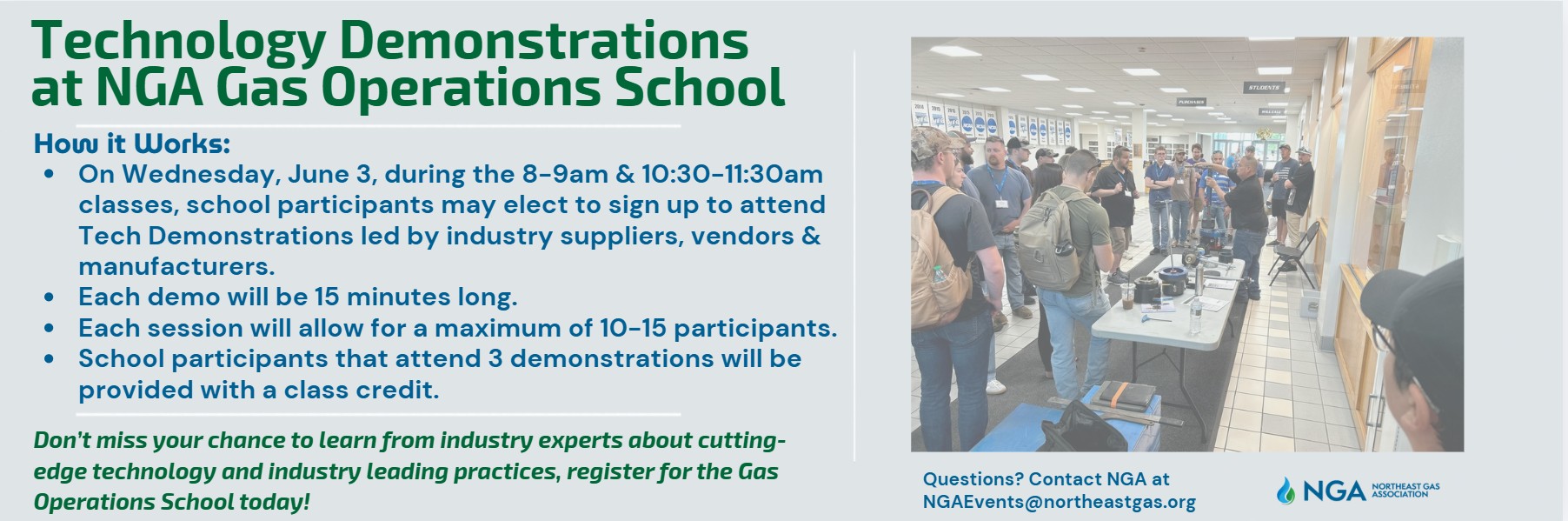
Another notable addition to this year’s program is the Technology Demonstrations, which will give attendees a closer look at emerging tools, equipment, and field applications shaping the natural gas industry.
Held Wednesday morning in the exhibit hall, the demonstrations are designed to give students hands-on exposure to current industry technology and direct interaction with manufacturers and technical experts. Students who attend any three demonstrations will receive one class credit toward their School Certificate.
Participating companies include Liberty Sales & Distribution, LLC; Mulcare Pipeline Solutions, Inc.; Bascom-Turner Instruments, Inc.; PLCS, LLC; and Kerr/T.D. Williamson. Demonstration topics include CGI technology and field applications for survey work, emergency response, construction, purging, and calibration procedures; thermal-activated fire safety shutoff valves and their role in emergency response safety; and polyethylene pipe manufacturing, joining methods, and gas industry applications. For both newcomers and experienced attendees, these sessions provide a practical way to expand field knowledge while connecting with leading suppliers and manufacturers.
What else to expect
The school will continue to offer seven core tracks and approximately 75 courses over three days. In addition to the new Utility Business Operations track, returning areas of focus include Pipeline Safety, Innovation & Management; Customer Service; Distribution; Construction; Gas Supply, Storage & Transmission; and Measurement, Control & System Design. This year, corrosion content is being embedded into other tracks such as Customer Service, Distribution, and Construction rather than standing alone, helping integrate that subject matter more directly into day-to-day operations training.
Beyond the classroom, attendees can expect expanded Friday morning hands-on workshops, field trip opportunities, and evening networking and social events. And of course returning traditions such as the Clambake, Gas Rodeo, and Exhibit Hall with 100+ vendors, all of which help make the school a practical and relationship-building experience as much as an educational one.
For anyone considering attending, this year’s Gas Operations School offers a compelling mix of tradition and change: a milestone anniversary, a broader curriculum, more hands-on learning, and new business-focused content designed to reflect where the industry is headed. For both first-time participants and longtime attendees, 2026 is shaping up to be a noteworthy year for the school.