
PSMS Lessons Learned - October 2026 - Risk Management Potentially Compromised
October 2026 Lesson Learned
API RP 1173 elements potentially compromised: The event most directly indicates gaps in Risk Management, Operational Controls, and Safety Assurance. Risk Management was potentially compromised because flooding, water intrusion, debris, regulator failure, and abnormal set-point conditions were not fully anticipated, evaluated, or mitigated as interacting threats. Operational Controls were potentially compromised because equipment design, vent-line integrity, filtration, preventive maintenance, set-point verification, and station monitoring did not provide sufficient barriers against overpressure. Safety Assurance was potentially compromised because limited telemetry and condition monitoring reduced the ability to detect degradation, confirm that safeguards were functioning, or identify adverse trends before an emergency alarm occurred.
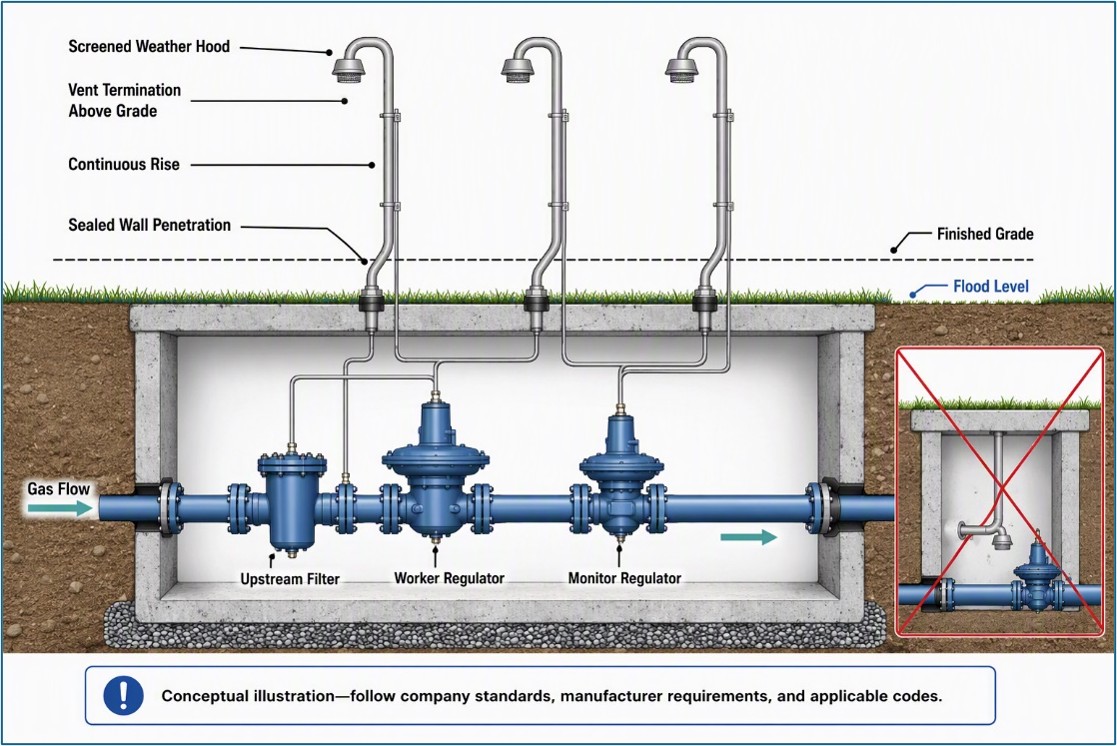
Conceptual regulator-station venting arrangement designed to reduce water-intrusion risk.
Description of Event
Gas Control received an emergency SCADA alarm notification from the low-pressure regulator station at Street A in the Operator's territory. The weather conditions were poor with heavy rain and flooding caused by tropical storm Elsa. The transmitter range exceeded its calibrated maximum of 30 inches water column. Upon being notified, the Pressure Management Supervisor and Mechanic arrived on site, and the regulator station vaults were found to be flooded
Root Causes and Contributing Factors
Contributing Factors: Factors that had the potential to contribute to the overpressure of the monitor were discussed with the equipment distributor:
- Monitor regulator did not operate due to being stuck in a full-open position.
- Debris impeded the monitor regulator from operating at desired pressure.
- Pressure setpoint increased artificially on both monitor and worker due to water intrusion caused by natural forces/weather event and caused the worker to continue operating at an elevated pressure.
- The monitor set point was incorrectly set out of normal range.
Key Corrective Actions
These recommendations strengthen and introduce safeguards to prevent or mitigate similar contributing factors in the future.
- Replace the spring casing plastic closing cap on all pilots with steel closing caps. Steel caps lower the probability of cross threading and decrease the risk of water entering the pilot relay spring case.
- Implement process to ensure vents are secure from water intrusion. A process to ensure vents are not susceptible to water intrusion may help prevent overpressure due to water. The current process ensures vents are cleaned out during periodic maintenance but does not check integrity of vent lines.
- Ensure telemetry is added to the impacted Stations. Pressure Management Mechanics relied on past knowledge to respond to this station and had no other indication other than operational experience. Adding telemetry to this station will enhance system knowledge to direct appropriate response.
- Ensure the current design for new regulator stations requires that all vent lines are above grade and include a filter upstream of the regulators. Asset risk evaluation is conducted on an annual basis for a percentage of regulator station assets. Evaluate opportunities to enhance regulator performance of existing assets during significant weather events. Possible enhancements include:
- The installation of a filter upstream of the regulators could eliminate system debris from collecting in the regulator.
- Ensure vent lines terminate outside vaults and an appropriate distance above grade
Key Lessons Learned
Implement process to ensure vents are secure from water intrusion. Ensure telemetry is added to the impacted Station. Ensure the current design for new regulator stations requires that all vent lines are above grade and includes a filter upstream of the regulators.